

“Ready to fly with nothing between you and the view? Our guide explains what microlights are, how they're regulated, and what to expect from one of the world's most immersive scenic flights.
There’s no feeling quite like flying in an open-cockpit aircraft. With the wind rushing past and the landscape unfolding below without a window in the way, a microlight flight connects you to the scenery in a way no helicopter or plane ever can. It’s a raw, totally unfiltered way to fly.
While it might look like a thrill-seeker's hobby, microlighting is a well-established and highly regulated part of aviation. It offers one of the most intimate ways to see iconic places. So, what exactly is it, and what do you need to know before booking?
What is a Microlight Aircraft?
A microlight (or ultralight, depending on where you are) is a lightweight aircraft built for one or two people. They are designed to fly low and slow, which is perfect for sightseeing. Instead of speeding over a landscape, you get to drift above it and take in every detail. You'll generally encounter two types:
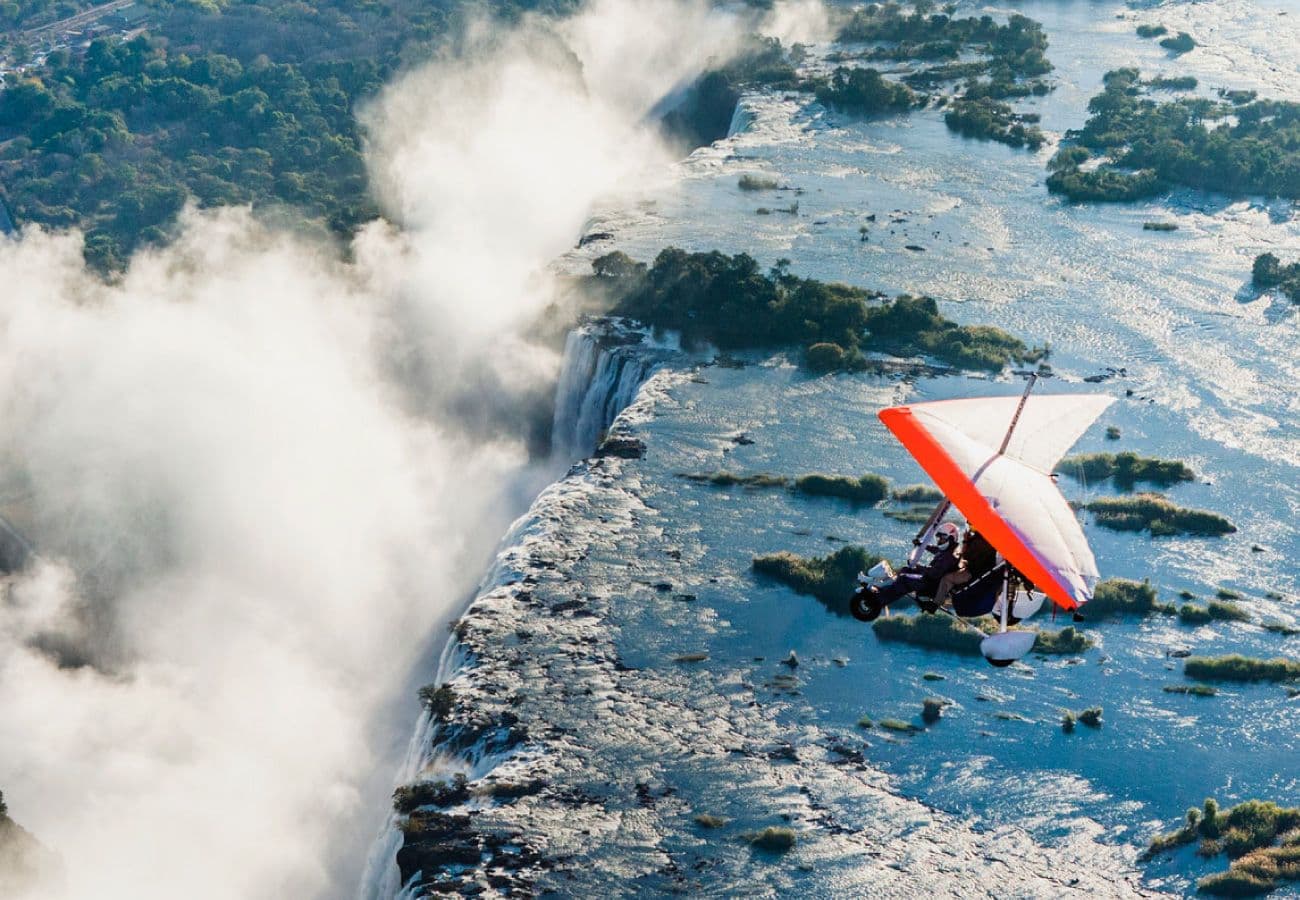
Weight-Shift Control (Trikes): These look like a hang glider with a tricycle engine pod underneath. The pilot steers by shifting their weight to move the wing, giving you the most elemental, open-to-the-elements feeling.
3-Axis Control (Fixed-Wing): These look more like a traditional small plane, with a stick and rudder controls. They might be partially enclosed but still offer a far more immersive experience than a standard aircraft.
The appeal is in their simplicity. You feel the air currents and see wildlife without the glare of glass, gaining a sense of scale that’s lost when you're miles high in a jet.

Safety, Regulation, and Modern Aircraft
The first question is usually about safety. Flying in such a minimalist aircraft can seem intimidating, but commercial microlight operations are held to incredibly high safety standards. Pilots go through extensive training for a specific Microlight Pilots License (MPL) and follow strict protocols, like those outlined by the Civil Aviation Authority of Zimbabwe for private pilots.
Aviation standards are always improving. For example, recent reforms by the UK Civil Aviation Authority increased the maximum takeoff weight for microlights. This allows for more advanced aircraft with digital cockpits and even ballistic recovery parachutes—a rocket-deployed parachute for the entire plane.
Commercial flights are also planned meticulously around the weather. Operators like Activities Victoria Falls fly only in the calm air of the early morning and late afternoon. This avoids the bumpy thermal turbulence from midday heat, ensuring a smooth and enjoyable ride.
The Iconic 'Flight of Angels' Over Victoria Falls
The 'Flight of Angels' over Victoria Falls is probably the most famous microlight flight in the world. This is where the aircraft truly shines. You can circle the thundering curtain of water, feeling the spray on your face as rainbows form in the mist below. It’s a view David Livingstone could only have imagined.
There is one crucial logistical detail to know: due to regional airspace rules, all commercial microlight flights over the Falls operate from the Zambian side, out of the Batoka Sky Aerodrome near Livingstone. As the Victoria Falls Guide notes, if you're staying in Zimbabwe, you'll need to cross the border. Make sure to factor in time for immigration and bring your passport.
Plan Your Own Aerial Safari Adventure
From the Flight of Angels to scenic flights over vast national parks, let our local experts build it into your perfect itinerary.
A helicopter gives you a fantastic panoramic view, but a microlight gives you a sensory one. It’s the difference between watching a great movie and actually being in it.

Preparing for Your Flight: What to Expect
Your experience starts with a thorough safety briefing on the ground. The pilot will walk you through the aircraft, the intercom system in your helmet, and what to expect during takeoff and landing. A few practical tips will make your flight even better:
Dress in Layers: Even on a warm day, it gets cooler and windier up there. Wear comfortable clothing and closed-toe shoes. Most operators provide a flight jacket.
Secure Your Belongings: Anything not tied down—hats, sunglasses, loose phones—must be left on the ground. Lockers are provided for your valuables. For safety reasons, you usually can't bring your own camera, but most aircraft have a wing-mounted camera to capture photos for you.
Trust Your Pilot: These pilots are professionals who have flown this route thousands of times. Relax, ask them questions, and soak in the incredible perspective they’re sharing with you.
Whether you’re soaring over the 'Smoke that Thunders' at Victoria Falls or drifting above an African savanna, a microlight flight is more than a tour. It’s a genuine connection to the landscape, offering a perspective that will stick with you long after you’ve landed.
Discussion (0)
No comments yet. Be the first to share your thoughts!
Leave a Comment